Hanafy Mahmoud
Hanafy Mahmoud (b. 1970, Al-Wady Al-Gadid, Egypt) is an Egyptian painter whose practice centers on the psychological and existential dimensions of the human condition. Based in Cairo, Mahmoud constructs life-sized figurative compositions that examine silence, tension, and the internal landscapes of contemporary existence.
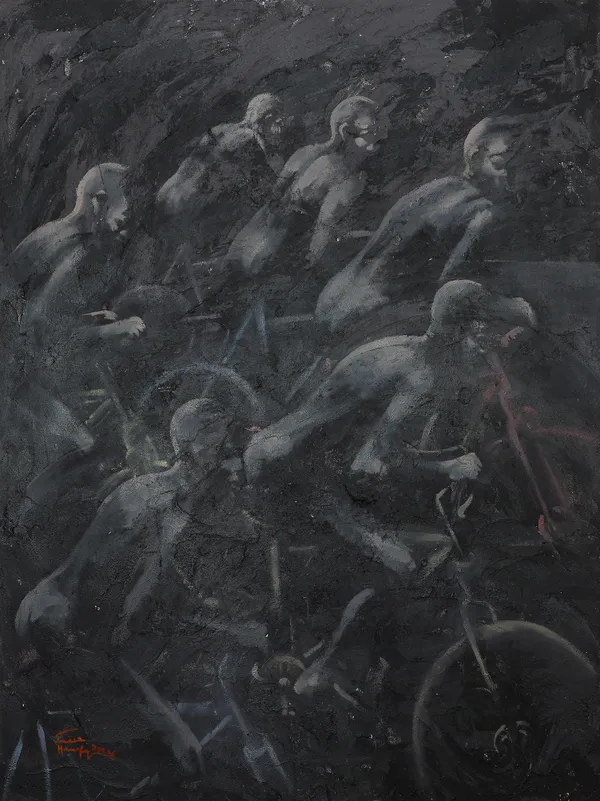
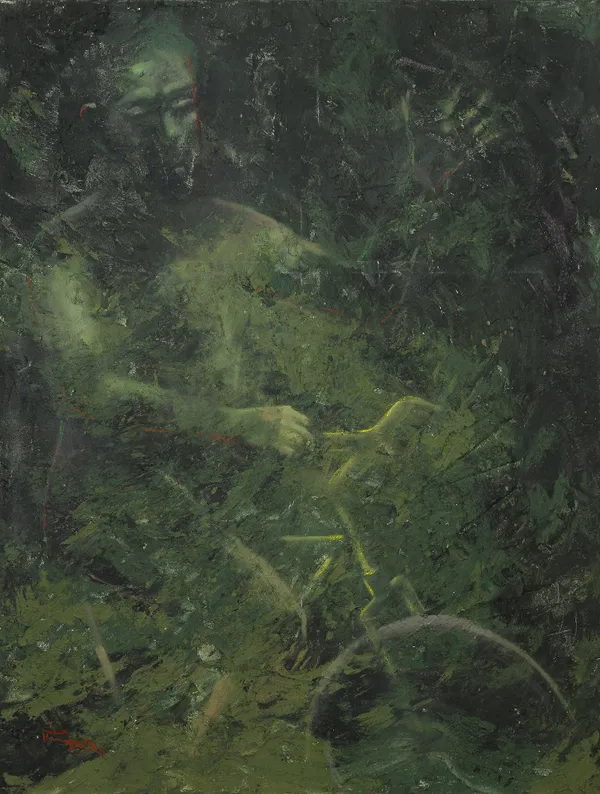
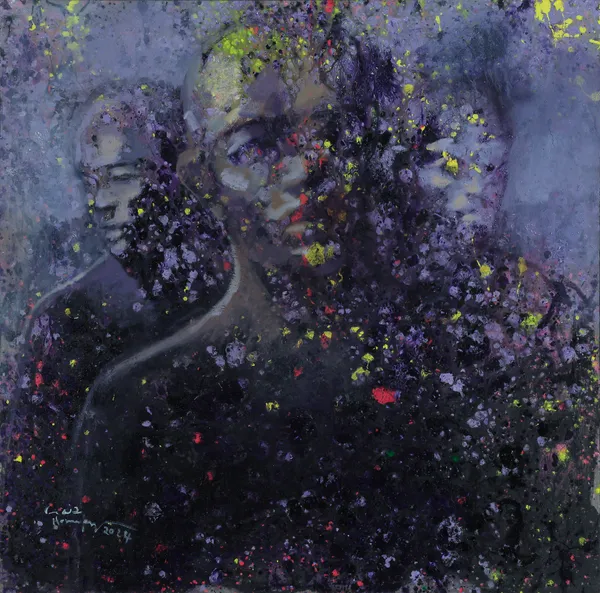
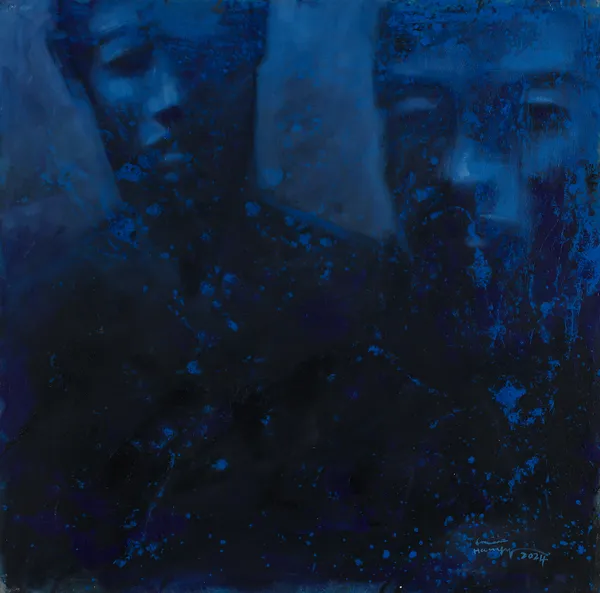
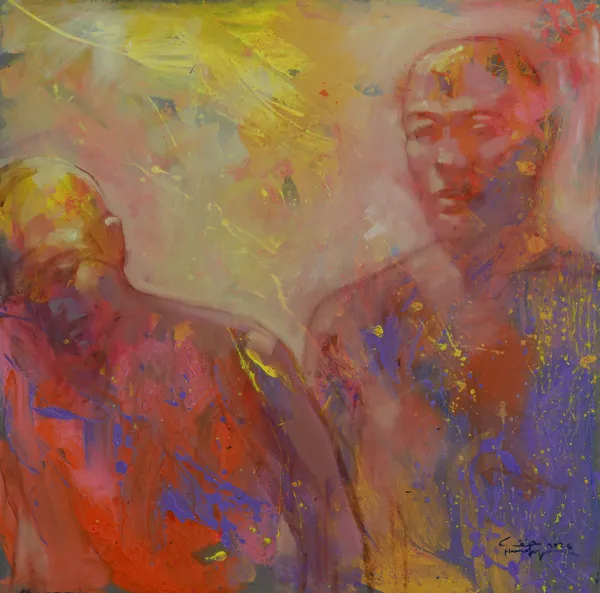
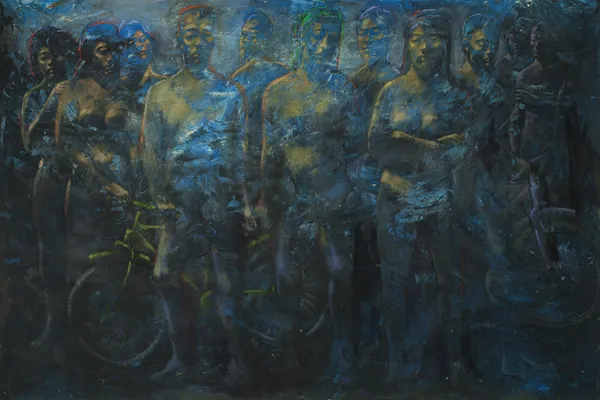
His paintings frequently depict solitary figures or clustered groups men and women, often nude set within ambiguous, dreamlike environments. These backgrounds resist narrative specificity, functioning instead as atmospheric extensions of emotional states. The human body becomes both subject and vessel: exposed, contemplative, and suspended between vulnerability and endurance.
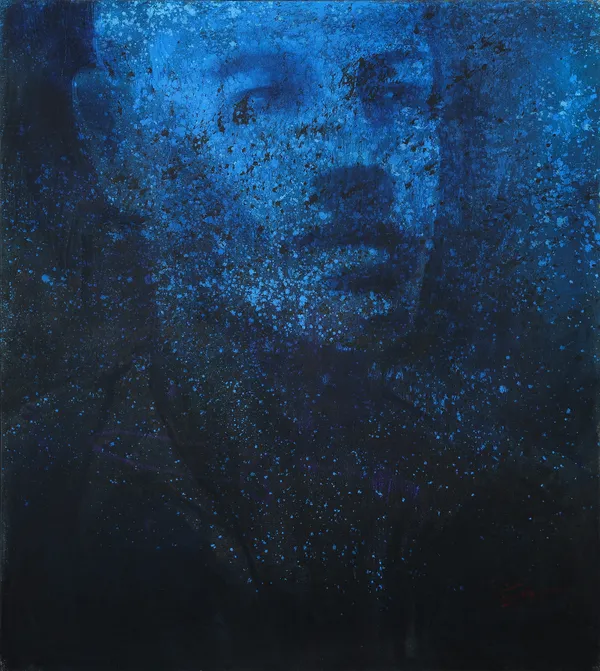
Central to Mahmoud’s work is his sustained observation of public life. The crowded street, the compressed space of public transport, the collective anonymity of urban existence these recurring social environments inform his imagery. Faces appear inwardly charged yet outwardly restrained; expressions hover between refusal, fatigue, and quiet resistance. The silence that permeates his figures is not emptiness, but density an internal accumulation of unspoken thought.
Mahmoud approaches the nude form not as spectacle, but as existential reduction. Stripped of social markers, the body becomes a universal site through which broader social, political, and economic tensions are felt rather than illustrated. His compositions often carry a subtle theatricality, yet they remain grounded in lived reality.
Humanity itself is the axis of his practice. Rather than dramatizing events, Mahmoud distills the emotional residue of collective experience transforming the everyday pressures of modern life into intimate, contemplative scenes.
Through monumental figuration and psychological restraint, Mahmoud positions painting as a space where silence becomes expressive, and the human presence isolated yet collective emerges as both witness and subject of its time.