
Wadhah Mahdi
Wadhah Mahdi (b. 1974, Iraq) is an Iraqi painter whose figurative practice navigates the intersection of memory, intimacy, and quiet resilience. Trained at Baghdad’s Institute and College of Fine Arts, Mahdi left Iraq in 2005, yet his work continues to draw deeply from the cultural and emotional fabric of his homeland.
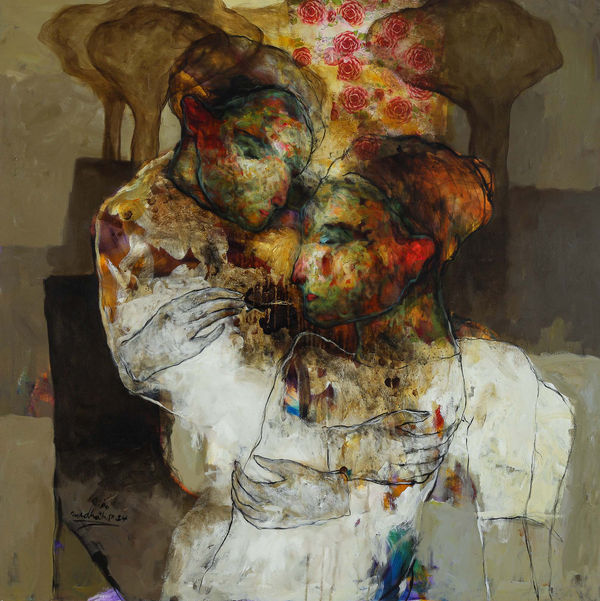
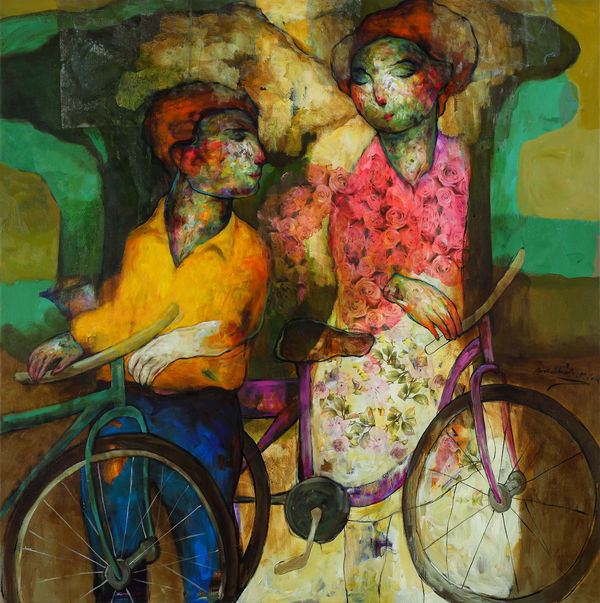
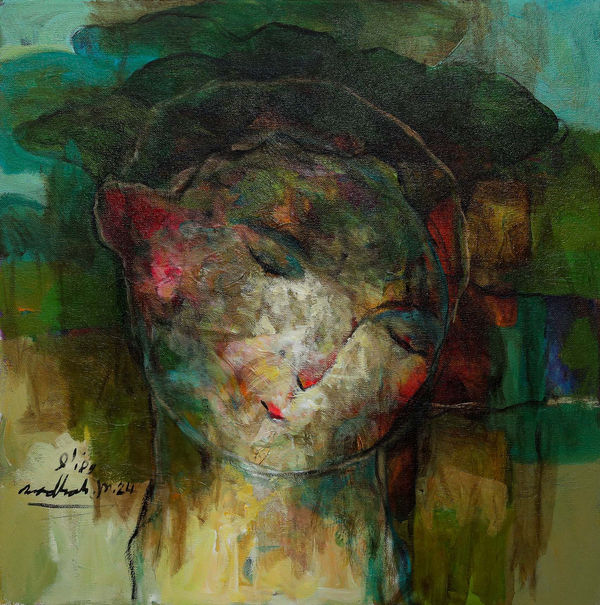
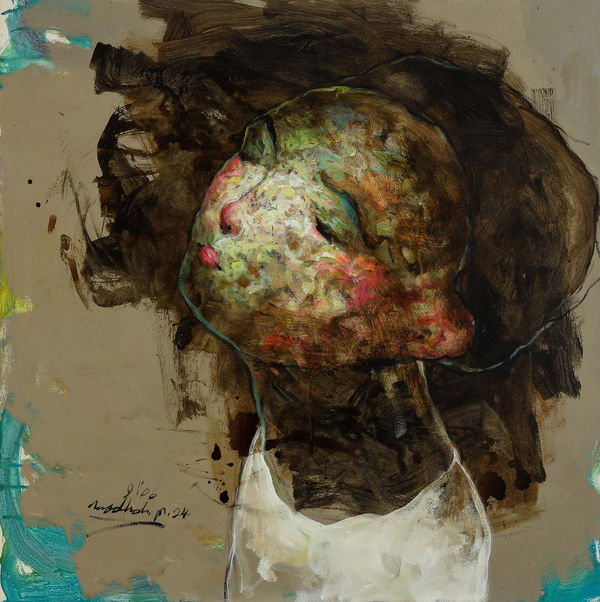
His paintings are characterized by warm, saturated palettes and carefully composed scenes that hover between realism and symbolism. Female figures often depicted with childlike softness occupy intimate, interior spaces. These figures do not dramatize experience; rather, they inhabit it quietly. Their presence is marked by stillness, shared warmth, and subtle gestures that suggest both connection and solitude.
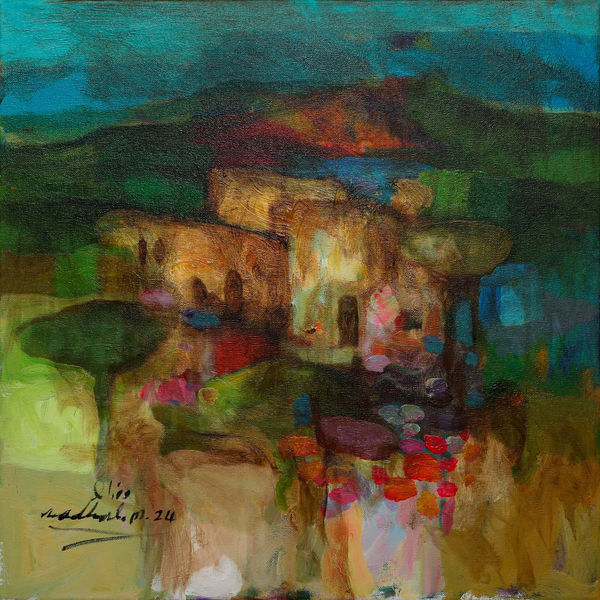
Mahdi’s work frequently balances chromatic joy with emotional undertones of melancholy. The brightness of rose, red, and earthen tones coexists with muted grays and browns, creating a tension between vitality and nostalgia. This coexistence defines the emotional register of his paintings: moments of tenderness layered with traces of loss.
Everyday acts holding fruit, sewing, sitting together become symbolic without losing their simplicity. In works where young girls share slices of watermelon, innocence is framed not as naïveté but as a fragile state of awareness. In scenes where a sewing machine anchors the composition, labor and contemplation intersect; domestic ritual becomes a metaphor for continuity and survival. Mahdi often employs elevated or softened perspectives, introducing a quiet observational distance that enhances the viewer’s sense of witnessing rather than intruding.
While deeply rooted in Iraqi cultural memory, his work resists overt political narration. Instead, it constructs emotional landscapes where belonging, femininity, and endurance are explored through restrained composition and symbolic clarity.
Mahdi has participated in numerous international exhibitions and has received recognition including the Iraqi Creativity Award (2021). Through his synthesis of realism and poetic symbolism, he positions painting as a space where intimacy and collective memory coexist where beauty and sorrow are inseparable aspects of lived experience.




-

غسيل أبيض ناصع
Group Exhibition 25 June 2025في زمنٍ بصريٍّ صاخب، لا يسعى هذا المعرض إلى الإدهاش بل إلى الإصغاء غسيل أبيض ناصع ليس عن البيت كجدران، بل عن الداخل كحالة، وعن لحظات تمرّ كل يوم دون...Read more -
صور باقية
By Wadah Mahdi 3 - 16 November 2024الأعمال التي يقدمها الفنان العراقي وضاح مهدي تفتح لنا نافذة على مشهد غامر باللون، وهو لون عتيق وشفاف ومُتفاوت في حضوره وكثافته. في هذه اللوحات تطالعنا وجوهاً طفولية لنساء و...Read more

