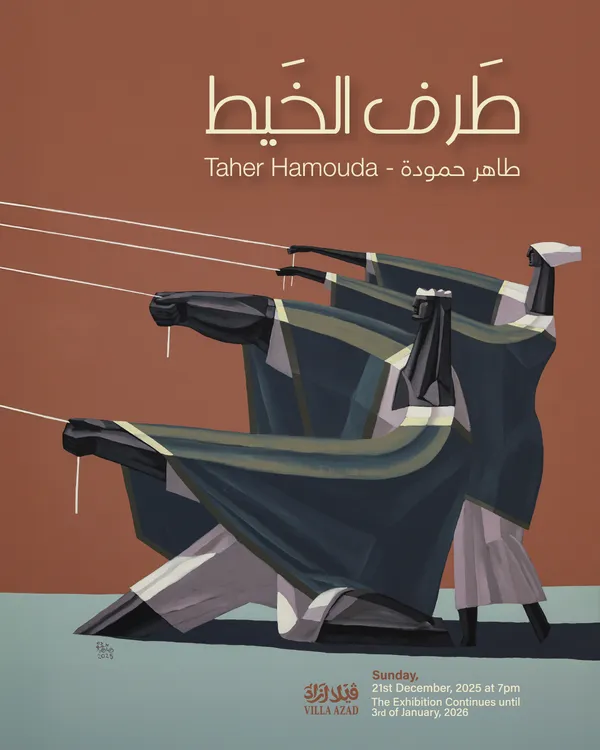
Taher Hamouda
Taher Hamouda (b. 1987, Gharbia, Egypt) is an Egyptian visual artist whose practice examines emotional interiority through symbolic reduction and spatial quietude. Living and working in Alexandria, Hamouda constructs contemplative pictorial environments where presence is distilled into gesture, object, and silence.
Educated at Alexandria University, where he later completed a PhD in Philosophy of Art, Hamouda’s work reflects a sustained inquiry into perception, belief, and the architecture of inner life. His early practice what he describes as the “Hidden Stage” was marked by dense symbolic layering, exploring the complexity of concealed emotions and unspoken psychological states. Over time, this visual density gave way to a more restrained language.
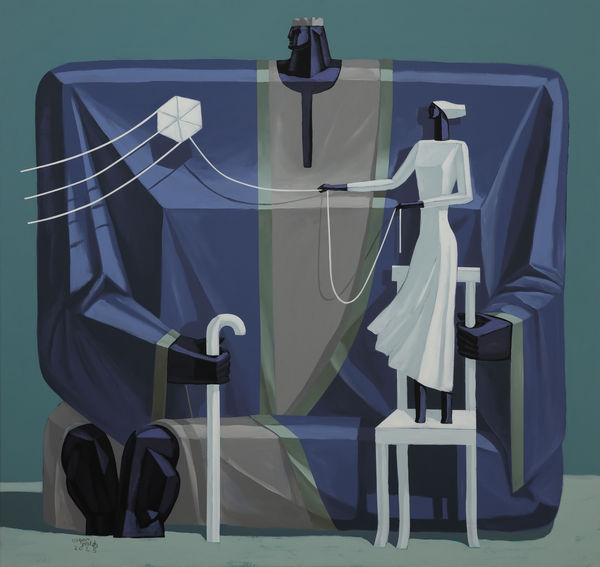
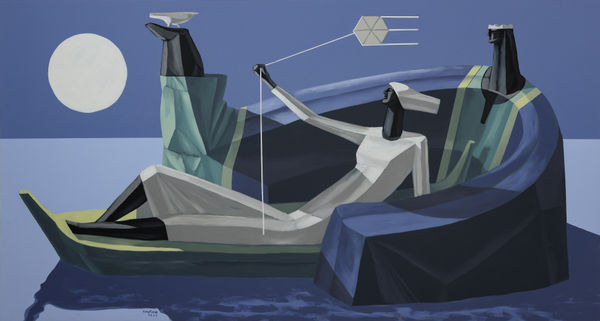
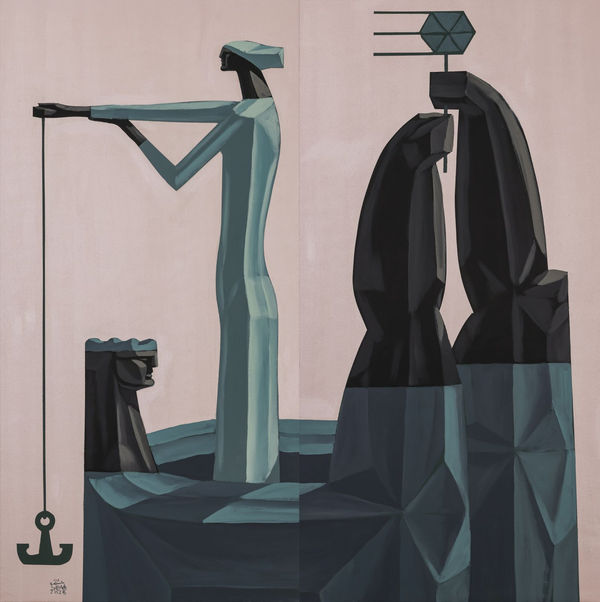
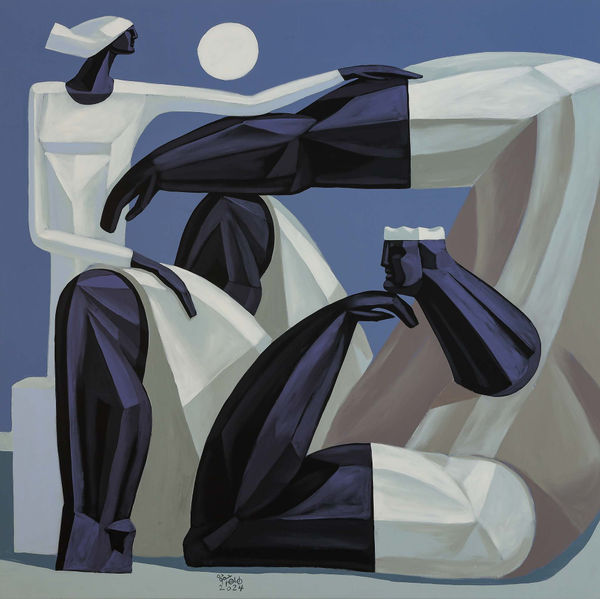
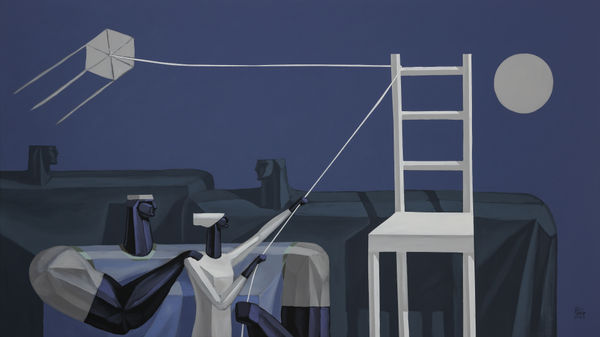
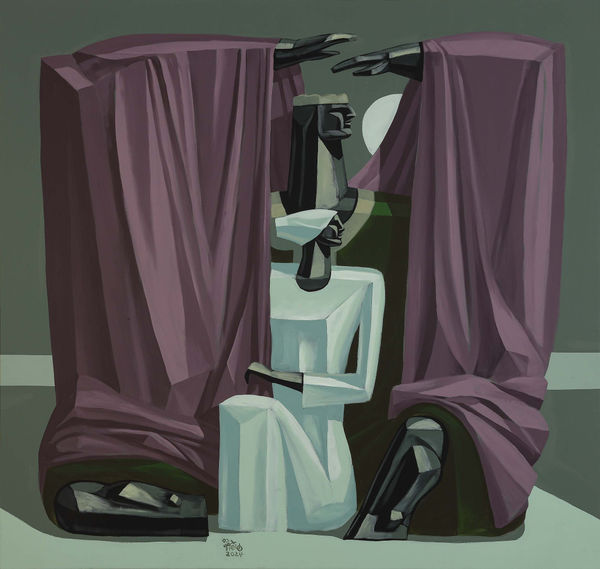
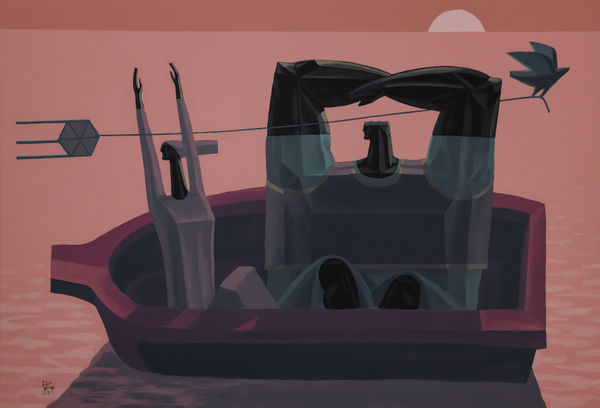
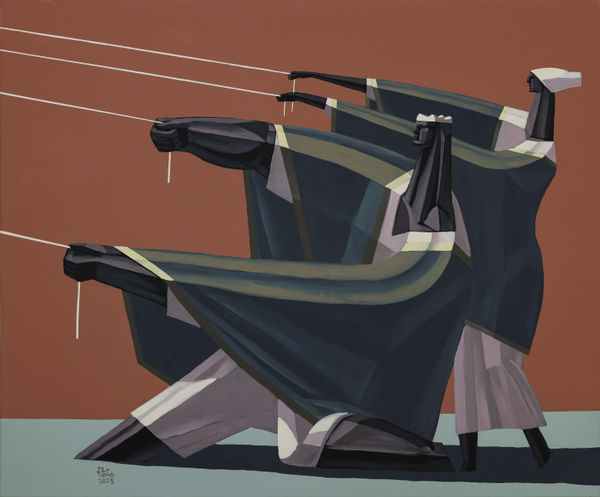
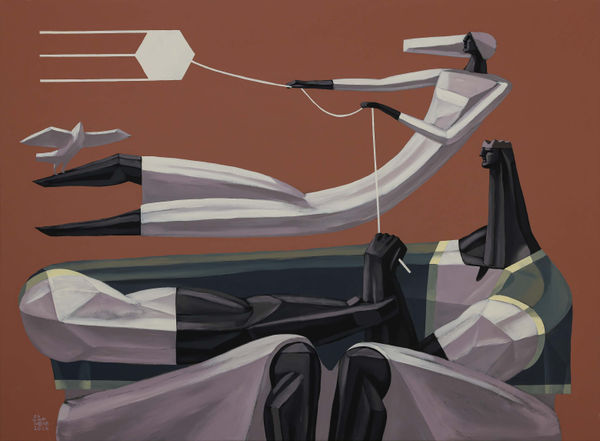
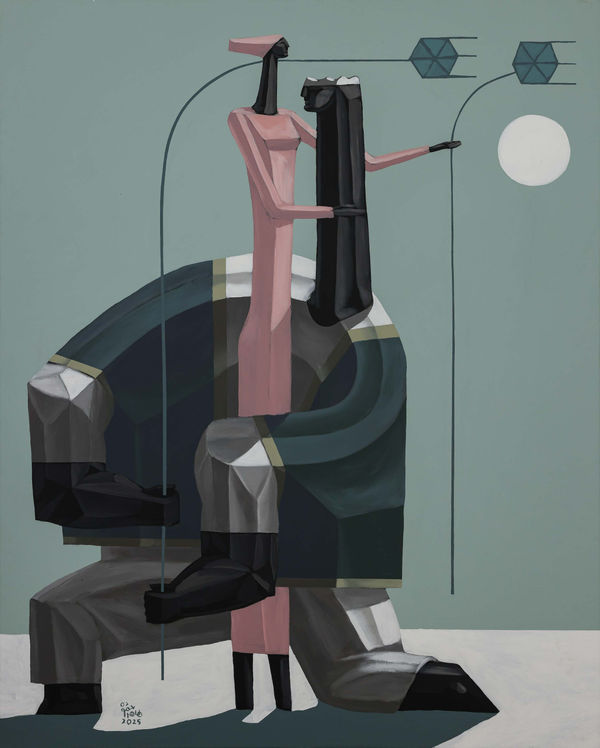
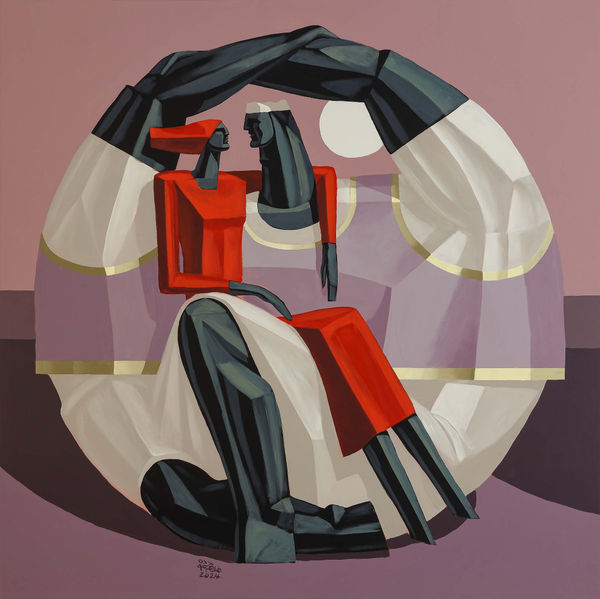
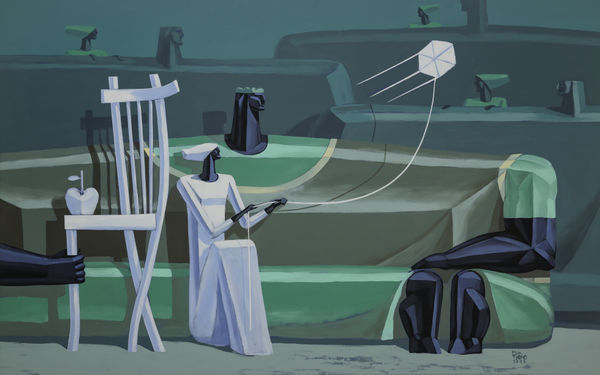
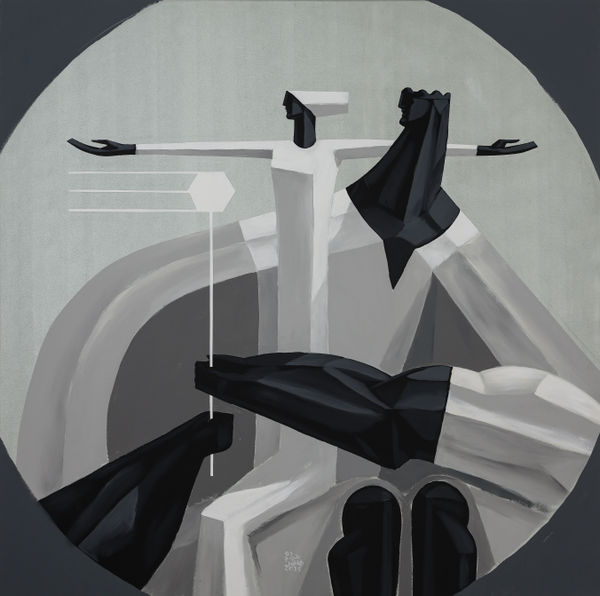
The emergence of the recurring figure known as the “Shadow’s Hero” marks a pivotal shift in his trajectory. Faceless and archetypal, this protagonist inhabits quiet landscapes of chairs, apples, horizons, and suspended objects. These elements function as metaphors rather than props signifiers of safety, choice, waiting, and relational tension. Through reduction rather than elaboration, Hamouda reorients the viewer toward stillness as an active state.
In his recent works, often described as part of an “Aware Stage,” the compositions open into clearer spatial arrangements, emphasizing harmony with nature and subtle human connection. The absence of defined facial features allows the figure to become universal, dissolving individuality in favor of shared experience. Silence becomes structural; emptiness becomes intentional.
Hamouda has presented solo exhibitions in Egypt and internationally, including Vienna and Cairo, and has participated in major institutional exhibitions such as those at the Museum of Modern Art in Cairo and Bibliotheca Alexandrina. His works are held in public and private collections across Egypt and abroad.
Through disciplined minimalism and philosophical grounding, Hamouda positions painting as a site of inner equilibrium where the search for meaning is neither dramatic nor declarative, but quietly sustained.

-

طرف الخيط
By Taher Hamouda 21 December 2025 - 3 January 2026يتأمل معرض «طرف الخيط» تلك اللحظة الدقيقة التي تسبق الوصل ... لحظة لا تُعلَن ولا تُرى بوضوح، لكنها تحمل بذرة العلاقة كلها. ليست وعدًا، ولا حدثًا فاصلاً، بل إحساسًا خافتًا:...Read more -
غسيل أبيض ناصع
Group Exhibition 25 June 2025في زمنٍ بصريٍّ صاخب، لا يسعى هذا المعرض إلى الإدهاش بل إلى الإصغاء غسيل أبيض ناصع ليس عن البيت كجدران، بل عن الداخل كحالة، وعن لحظات تمرّ كل يوم دون...Read more