Maher Guirguis
Maher Guirguis is an Egyptian artist whose practice is deeply rooted in Alexandrian identity, drawing from the layered visual memory of a city shaped by Pharaonic, Hellenistic, and Mediterranean histories. A graduate of the Faculty of Fine Arts, Alexandria (1973), Guirguis developed a structured visual language grounded in ornamental precision, disciplined line work, and architectural composition.
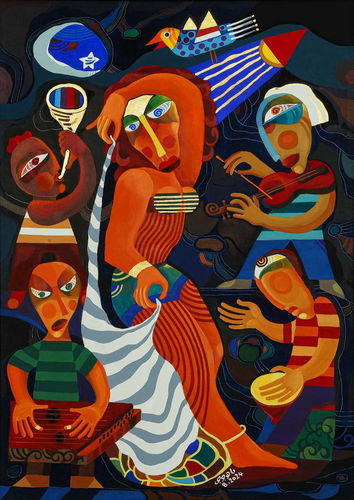
His paintings construct carefully orchestrated environments in which figures, symbols, and decorative elements coexist within unified spatial systems. Each composition unfolds with measured deliberation, revealing a theatrical sensibility forms appear staged, positioned, and animated as though participating in an internal dramaturgy. The image is not spontaneous; it is assembled.
Ancient Egyptian visual logic, Greco-Roman heritage, and the coastal cosmopolitan character of Alexandria inform his symbolic vocabulary. These influences surface not as quotation, but as structural memory embedded within pattern, rhythm, and compositional balance. His works often reconcile ornament with figuration, merging decorative fluency with narrative suggestion.
Parallel to his studio practice, Guirguis played a significant role in Alexandria’s cultural infrastructure, serving in leadership positions within the Ministry of Culture, including Director of the Sidi Gaber Creativity Center and later General Director of Alexandria Culture. This sustained engagement with the public cultural sphere reflects his broader commitment to shaping visual discourse beyond the canvas.
Guirguis has presented multiple solo exhibitions, including Thresholds of Joy (2015) and Tender Paths (2025, Museum of Egyptian Modern Art, Cairo Opera House), alongside consistent participation in national exhibitions and international platforms. His works are held in private collections in Egypt and abroad.
Through ornamental structure, historical resonance, and compositional discipline, Guirguis positions painting as a space where identity is not represented, but constructed line by line, symbol by symbol.


